Leak diagnosis and targeted repairs
We track leaks to their source and repair the specific failure point, which often involves flashing, penetrations, or a small section of shingles rather than broad guesswork.
Serving Alpharetta, Georgia & surrounding areas
Mon–Fri 8am–6pm · Sat 9am–2pm
Get a clear roof assessment, a written scope, and workmanship you can count on, whether you need a small repair, storm follow-up, or full replacement.
A good roofing contractor Alpharetta homeowners can trust does more than give a quick price. You should expect a careful inspection, straightforward options, and a plan that fits your roof's age, layout, and ventilation.
At Roofing Alpharetta GA, our work starts with identifying the real cause of the problem: wind-lifted shingles, nail pops, deteriorated pipe boots, failed flashing at a wall or chimney, or a leak traveling along decking before it shows up on a ceiling. In North Fulton County, strong thunderstorms, wind, and hail events can create damage that is easy to miss from the ground, so we focus on details that determine whether a repair will last.
If you are comparing contractors, ask how they document findings—photos help—what materials they plan to use, what will be replaced versus re-used, and how they protect landscaping and clean up fasteners and debris. The answers tell you a lot about how the job will go once work begins.
We track leaks to their source and repair the specific failure point, which often involves flashing, penetrations, or a small section of shingles rather than broad guesswork.
When a roof is at the end of its service life or damage is widespread, we provide a written scope covering tear-off, underlayment, ventilation, flashing details, and installation approach.
After major weather, we check for creased shingles, granule loss, flashing damage, and impact marks, then document what we find so you can make a clear decision on next steps.
Small issues like exposed fasteners, cracked sealant, or worn pipe boots can turn into interior damage. A tune-up keeps water out and extends the life of the roof system.
Balanced intake and exhaust ventilation helps control heat and moisture in the attic. We look for blocked soffit intake, undersized exhaust, and signs of condensation-related staining.
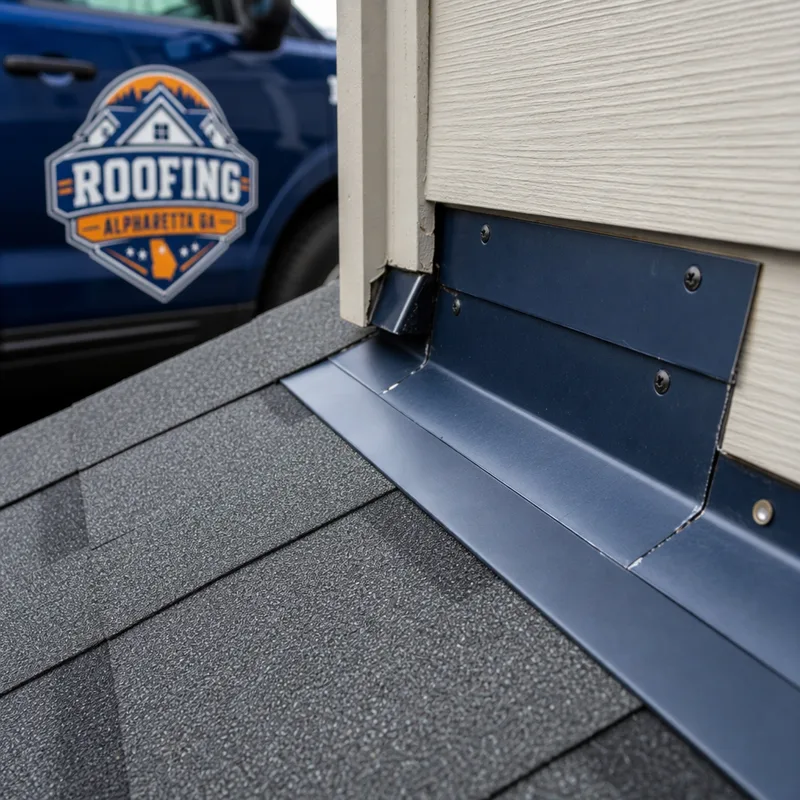
Chimneys, step flashing at sidewalls, skylights, and plumbing vents are common leak points. We focus on proper metal details and correct sealant use where it actually belongs.
Roofing decisions are always local. In Alpharetta you see a mix of newer subdivisions and established neighborhoods, and that affects what we check first.
In areas like Windward and nearby communities with larger roof footprints, the details at valleys, dormers, and multiple roof-to-wall intersections often determine long-term leak risk. In older parts of Alpharetta and nearby Johns Creek and Roswell edges, we frequently see aging pipe boots, worn sealant at flashing, and patchwork repairs from past storms that need to be corrected so water stops finding new paths.
Across North Fulton, heavy rain can exploit small openings fast, and wind can lift tabs and break the seal strip on asphalt shingles. That is why we inspect ridge caps, starter courses, step flashing, and the condition of underlayment at vulnerable edges.
If you want a quick overview of how our team approaches inspections, repairs, and replacements, Alpharetta Roofing Services summarizes the full scope we support for local properties.
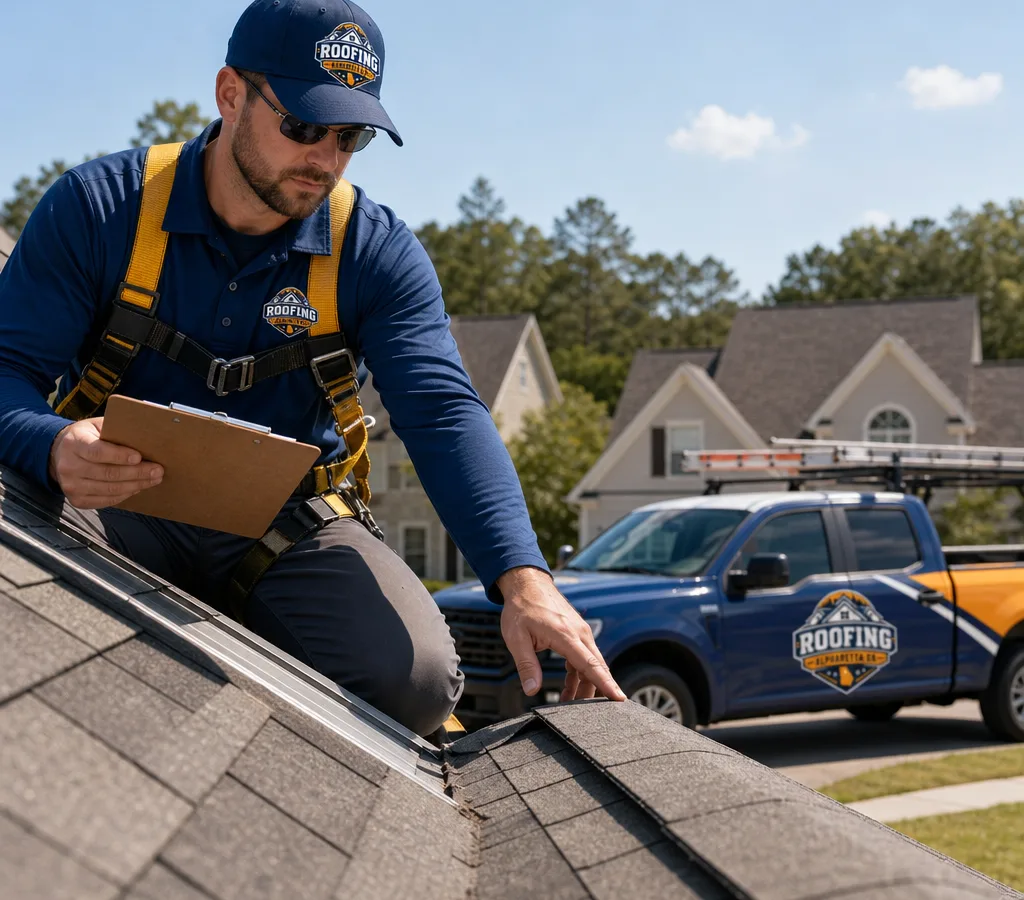
We assess the roof surface and the risk areas: penetrations, flashing lines, valleys, ridges, and any spots where water can back up. If there is an interior symptom, we consider how water may be traveling before it appears.
You receive a clear description of what we found and what we recommend, including materials and which components are being repaired or replaced—shingles, flashing, pipe boots, or underlayment areas.
When a repair makes sense, we focus on durability and correct detailing. When replacement is the smarter call, we outline an installation plan that covers tear-off, deck condition checks, ventilation, and water-shedding details.
We coordinate timing, protect landscaping where possible, and set expectations for noise, debris control, and what areas need access.
We confirm the completed work, review the repaired or replaced areas with you, and complete a thorough cleanup, including ground pickup around the work zone.
In Alpharetta, roofing contractor work typically ranges from about $300 to $1,200 for many common repairs, while a full roof replacement often runs roughly $9,000 to $22,000+ depending on size, pitch, material, and tear-off needs.
Your final price depends on roof square footage, number of layers to remove, decking condition, steepness and access, how much flashing work is required, and the shingle or system you choose. The exact cost is confirmed after an on-site inspection and a written scope.
“After a heavy storm we had a leak near a vent pipe. The inspection photos made it obvious what failed, and the repair was done cleanly with matching shingles. No more drip the next time it rained.”
“We got a written scope that explained ventilation and flashing details instead of a vague quote. The crew protected the landscaping and the cleanup was thorough.”
Many active leaks can be assessed quickly, but timing depends on weather and roof access. If rain is in the forecast, we prioritize temporary stabilization first when feasible and then schedule the permanent repair once surfaces are safe to work on.
A roofing estimate should clearly list the work area, materials such as shingle type, underlayment, flashing, and ventilation components, tear-off and disposal if applicable, and what is excluded. In Alpharetta storm follow-ups, photo documentation of damage is also helpful for decision-making.
You can often repair a localized issue when the surrounding shingles and underlayment are still in good shape and the problem is isolated to flashing, a penetration, or a small section of wind damage. Replacement is usually the better plan when damage is widespread, shingles are brittle or failing across the field, or prior patching has created multiple weak points.
We look uphill from the interior stain and inspect common travel paths such as decking seams, rafters, and penetrations, because water can run along wood before it drops into insulation or drywall. The most frequent sources are flashing lines, vent boots, valleys, and fastener-related failures.
Asphalt shingles are very common for residential roofs in the area, and many properties also have architectural shingles. During inspection we also look at the full system around the shingles: underlayment, drip edge, valley details, and ventilation, because those parts often decide how well the roof performs.
Yes, because damage is not always obvious from the ground. Wind can crease shingles without tearing them off, and hail can bruise shingles or damage flashing, which may not leak immediately but can shorten roof life and lead to future leaks.
Tell us what you are seeing and when it started. We will inspect the roof, explain the options in plain language, and provide a written scope so you can move forward with confidence.