Leak diagnosis and repairs
We trace leaks to their source, which is often flashing, pipe boots, valleys, skylights, or step flashing at sidewalls, not the shingle field. Repairs focus on restoring the water-shedding details that failed.
Serving Alpharetta, Georgia & surrounding areas
Mon–Fri 8am–6pm · Sat 9am–2pm
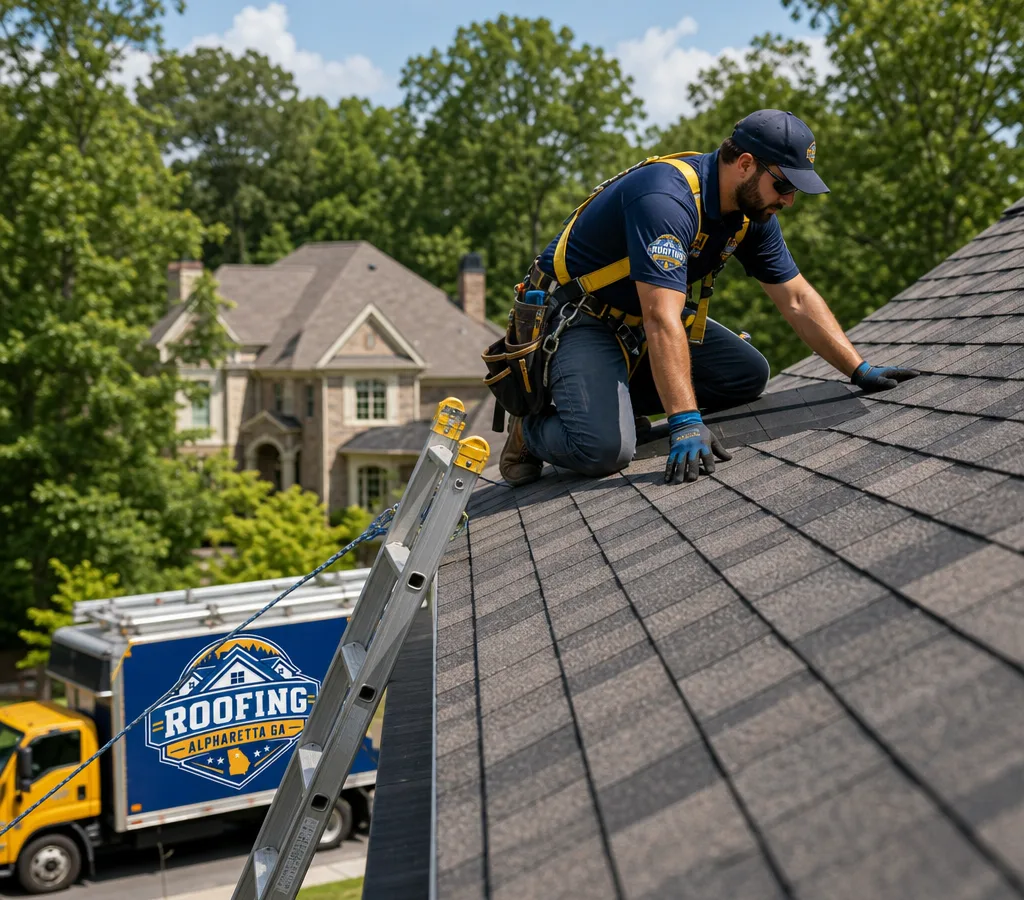
Repairs, replacements, and inspections for North Fulton homes. Get a clear roof plan, straightforward options, and a job site that's kept clean from tear-off to final magnet sweep.
If you're searching for residential roofing Alpharetta GA, you're usually dealing with one of three realities: wind-driven storms, heavy rain, or slow leaks that show up around penetrations and transitions.
In North Fulton, roofs often take extra wear from tall trees and shaded slopes. Organic debris holds moisture, shingle granules wash into gutters, and small flashing gaps can turn into ceiling stains. Our job is to find the real entry point, explain what's happening in plain language, and give you a written scope that matches the condition of your roof.
Roofing Alpharetta GA handles the full range of residential roofing work in Alpharetta, GA: detailed inspections, targeted repairs, and full roof replacement when the system is worn out or damaged beyond reasonable repair. If you're also comparing broader options and service availability, our overview of Alpharetta roofing services can help you see how different roof needs are handled under one roof.
We trace leaks to their source, which is often flashing, pipe boots, valleys, skylights, or step flashing at sidewalls, not the shingle field. Repairs focus on restoring the water-shedding details that failed.
When shingles are brittle, missing, badly granule-starved, or repairs are stacking up, replacement is usually the smarter long-term move. We install complete roofing systems, not just new shingles.
After a rough weather day, we document lifted tabs, torn shingles, punctures from debris, and compromised flashing. You get photos and a practical recommendation on what needs attention now.
Roof performance depends on the details: drip edge, valley flashing, chimney and wall transitions, and balanced intake/exhaust ventilation. Fixing these often solves recurring issues.
We address roof-edge rot risk, fascia concerns, and shingle-to-gutter drainage problems that show up when water overshoots or backs up at the eaves.
Many Alpharetta homes have steep pitches, multi-level lines, and lots of cut-up geometry. We plan staging, protection, and material handling to keep the project controlled.
A residential roof is a system. The shingles are the visible surface, but the roof only performs when the layers and transitions are correct.
On repairs, that usually means replacing compromised materials and restoring watertight details at the problem area: properly lapped underlayment, correctly formed flashing, and seal points that are placed where water naturally sheds.
On replacements, it means the basics are done right and verified as work progresses:
If you live near busy corridors like GA-400 and have wind exposure on higher roof lines, we pay extra attention to edge details and fastening patterns, because that's where wind tends to start peeling a roof back.
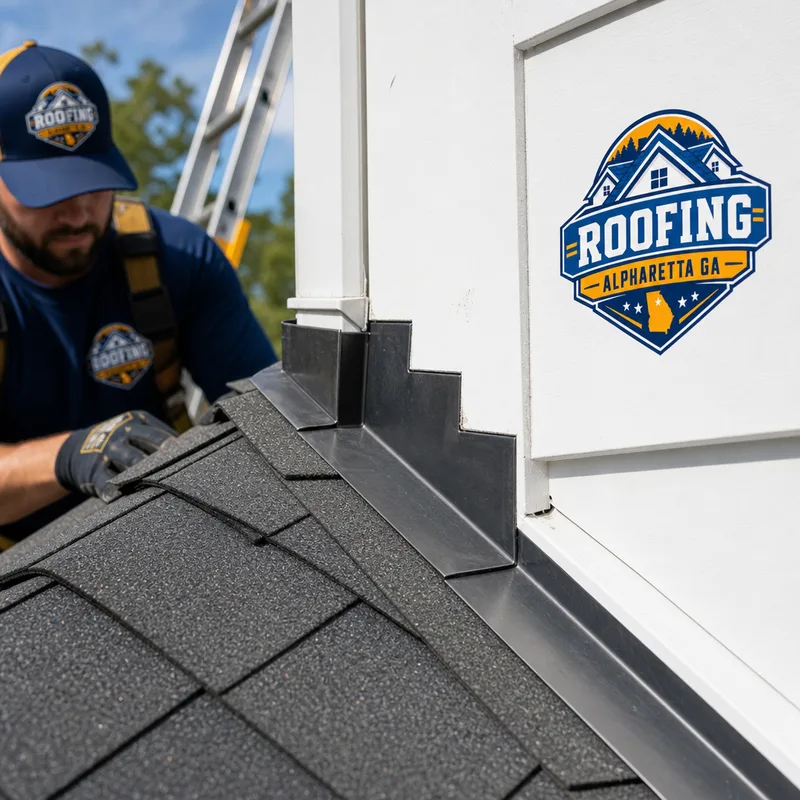
We inspect the roof surface and the details that most often fail, plus any accessible attic signs of moisture. You get photo documentation and a clear explanation of what we found.
You receive a written scope that distinguishes repairable items from system-level wear. If replacement is on the table, we outline material and venting options in plain terms.
Before work starts, we stage materials and set protection for landscaping and walkways. We plan debris control so the job stays orderly.
Repairs focus on restoring the failed detail. Replacements follow a system approach: deck prep, underlayment, flashing, shingles, ridge components, and ventilation as needed.
We clean up the site and perform a final walkthrough with you. If there's a concern, it gets addressed while we're still on site and set up to fix it.
Residential roofing in Alpharetta typically runs about $350 to $1,200 for many common repairs, while a full roof replacement is often $9,000 to $22,000+ depending on roof size, pitch, layers, and material choice.
Your final price changes most with roof complexity (steepness, number of facets and valleys), tear-off and deck repair needs, ventilation upgrades, and flashing work around chimneys, skylights, and walls. The exact cost is confirmed after an on-roof inspection so the scope matches the condition we can document.
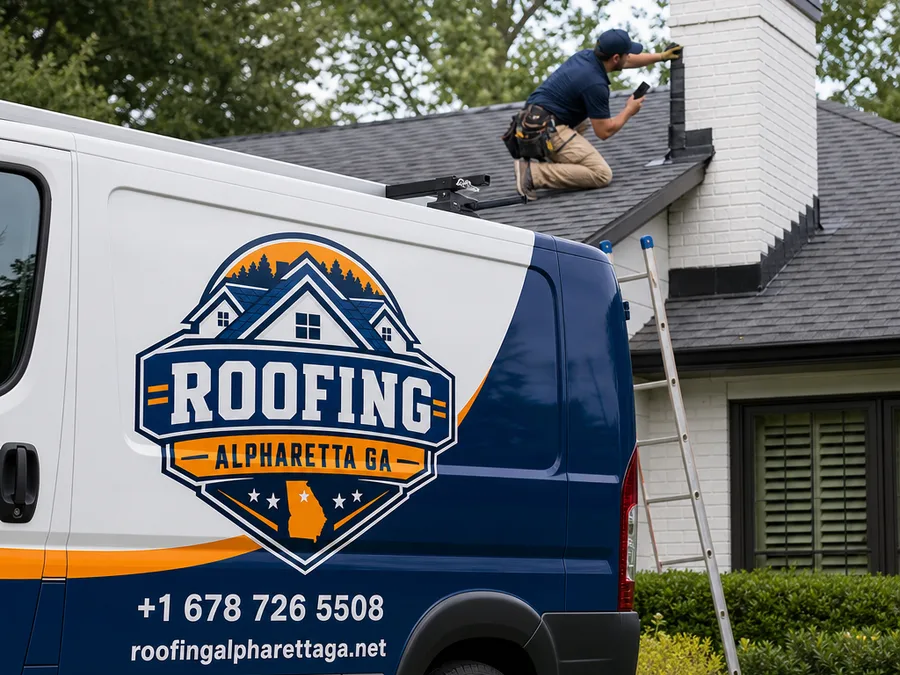
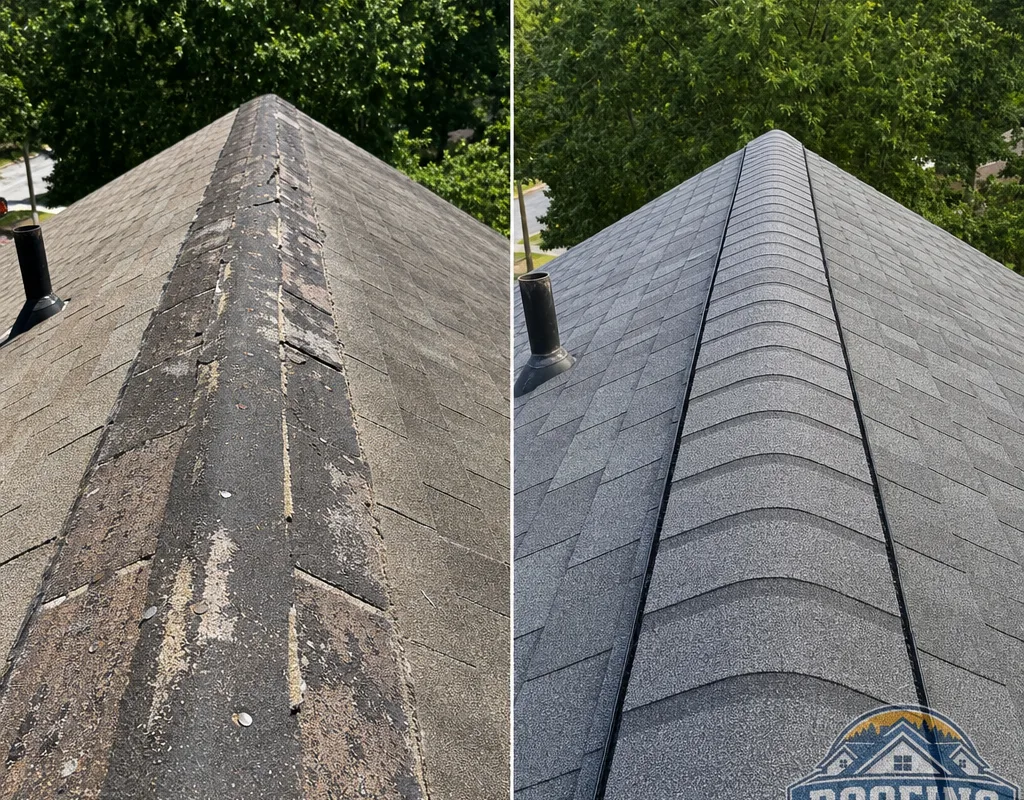
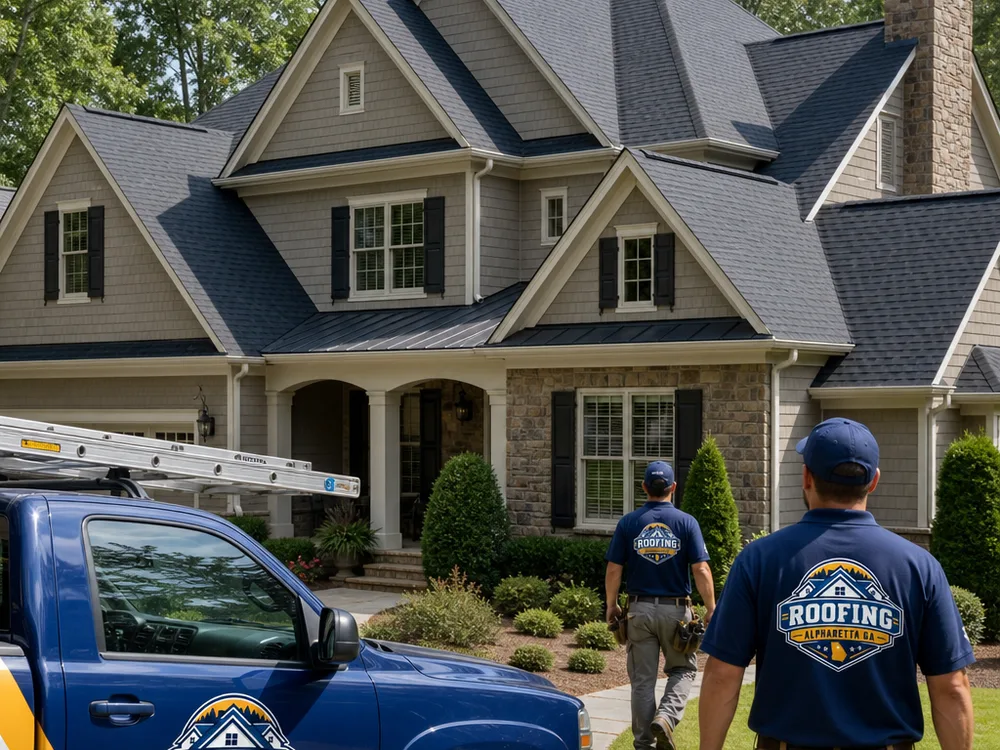
A repair makes sense when the issue is localized and the surrounding shingles and roof details still have life left. Replacement becomes the better option when shingles are brittle or consistently failing across multiple areas, when you have recurring leaks at several transitions, or when the roof system is no longer performing as a whole. We'll show you what we see on the roof and explain why a repair will or won't hold.
Many standard residential roof replacements can be completed in 1 to 2 days, but complex roofs with steep pitches, multiple layers, or deck repairs can take longer. Weather also matters, especially when rain is in the forecast and the roof must be dried-in in phases. We'll give you an expected schedule based on your roof's layout and access.
Most leaks we see come from flashing and penetrations rather than the middle of the shingle field. Typical culprits include pipe boots, step flashing where roofs meet walls, chimney flashing, valleys, and improperly sealed nail pops. Tree debris and clogged gutters can worsen these issues by holding water where it shouldn't sit.
Yes. We perform storm inspections and provide clear photo documentation of what's damaged, what's cosmetic, and what needs immediate attention to prevent water intrusion. That documentation also helps you keep a record of roof condition over time, which is useful when comparing repair versus replacement.
Yes, if decking is soft, delaminated, or cannot hold fasteners properly, it needs to be replaced so the new roof has a solid base. We identify and discuss any decking concerns we can see during inspection, and if additional issues appear during tear-off, we'll document them and confirm the updated scope before proceeding.
We protect the work area with tarps and planned debris handling, then perform a thorough cleanup at the end of the job, including a magnet sweep for nails. If you have delicate plantings near drip lines or tight access near driveways and walkways, tell us during scheduling so we can plan staging and protection around them.
Tell us what you're seeing—leak, missing shingles, storm concern, or an aging roof. We'll inspect, document what matters, and give you a straightforward scope and options you can compare with confidence.